Home > Case
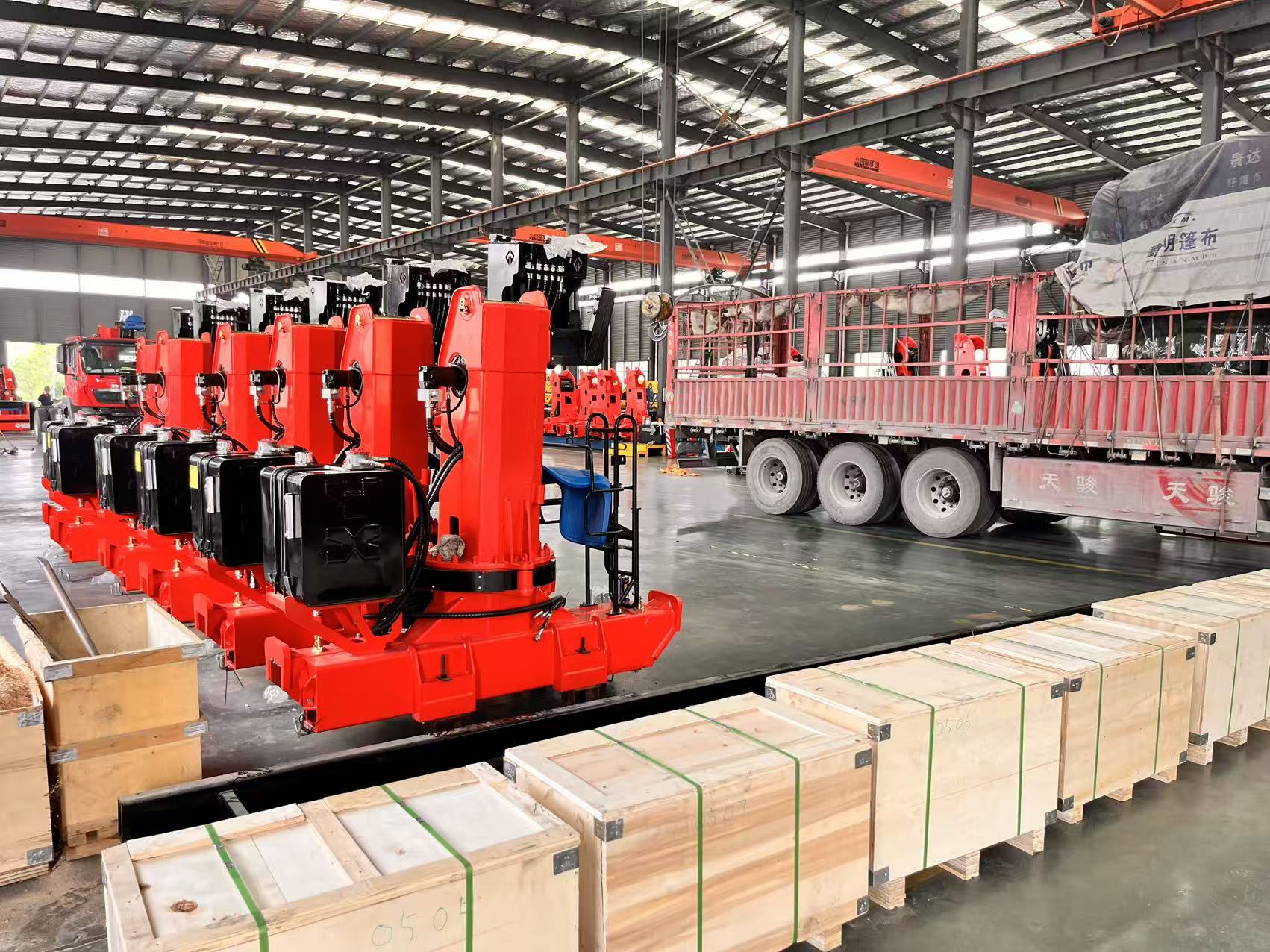
This delivery of 13 Hydraulic Crane units is not the customer’s first purchase, but rather their third repurchase based on previous user experience.
The client is a large engineering and construction group in Myanmar. As our business expands, customer demand for hydraulic cranes continues to grow, and the core reasons for their continued preference for our products include:
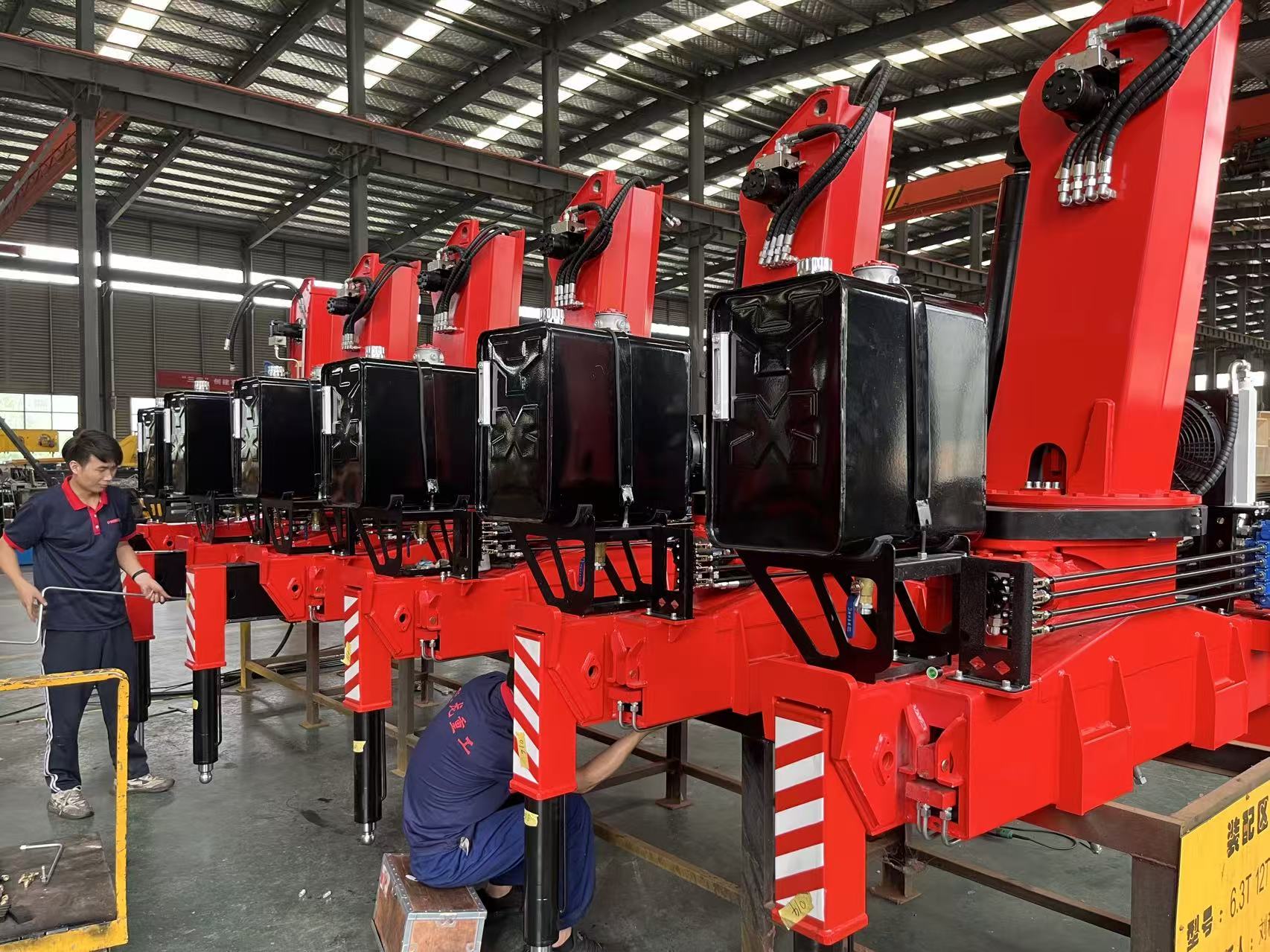
“Tropical” Modification of cranes
Before the equipment left the factory, the project’s technical team carried out targeted upgrades to the cooling systems of all 13 Hydraulic Crane units:
| Item | Measurement | Purpose |
| Hydraulic seal | Replace all seals with fluororubber rings (temperature resistant -20~200℃). | Extend service life under high temperature conditions |
| Cooling system radiator | Aluminum plate-fin hydraulic oil radiator and electric fan with intelligent temperature control. | Ensure that the oil temperature does not exceed 80℃ during continuous operation for 8 hours. |
Why is the cooling system the “Achilles’ heel” of a crane?
High-temperature thinning of hydraulic oil increases internal leakage, resulting in weak lifting power, slower operation, and accelerated aging of seals due to prolonged high temperatures. Leaks begin to appear after 3-6 months, leading to frequent maintenance. Hydraulic components are prone to operational malfunctions, jamming, or even complete failure, seriously affecting the operational safety of the crane.
Actual Verification: During continuous operation tests at an oilfield site in Magway Region, Myanmar (ambient temperature 44℃, continuous lifting for 8 hours), the enhanced hydraulic oil temperature remained stable between 68-72℃, while the oil temperature of another brand’s unmodified crane exceeded 90℃ and exhibited sluggish operation.
Customer Feedback on the Cooling System:
“The cooling system on these cranes is excellent. Ground temperatures in Myanmar often exceed 50℃ at midday. With other cranes, the hydraulic oil would become unbearably hot after just two hours of operation, causing slow operation and leaks. With these cranes, the oil temperature gauge never exceeded 70℃, and the operating lever pressure remained consistent. This is truly a product developed for the Myanmar market.”
— U Aung Naing, Customer Equipment Management Manager